What Makes a School Environment Truly Effective for Student Success?
A school paris learning environment directly impacts academic achievement, social development, and long-term success. Recent 2025 research from the French Ministry of Education reveals that students in well-structured learning environments show 23% higher academic performance compared to traditional settings. How do you identify the right school paris learning environment for your child's unique needs? Schools like École Galilée in the 16th arrondissement demonstrate how specialized approaches create optimal conditions for learning. Their commitment to personalized learning Paris and small class sizes exemplifies what makes a truly effective school paris learning environment - one that adapts to each student rather than forcing conformity. Visit https://www.ecolegalilee.fr/en/ to discover their innovative methodology!
Quick insight: The most effective schools prioritize individual student growth over standardized approaches.
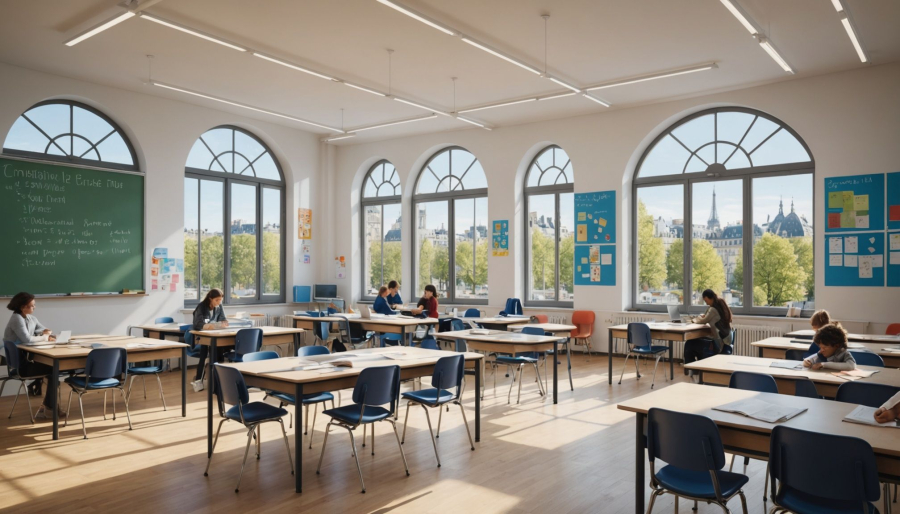
Key Points to Remember
- Small class sizes: Classes of 15-20 students in a school paris learning environment show 23% higher academic performance, enabling personalized attention and stronger teacher-student relationships
- Specialized support for gifted children: Gifted children education Paris requires differentiated instruction, emotional support, and advanced programming to address academic asynchrony and social-emotional development needs
- Bilingual education advantages: Bilingual school Paris programs enhance cognitive flexibility, improve academic performance across subjects, and prepare students for global career opportunities
- Innovative teaching methods: Project-based learning, technology integration, and collaborative approaches in international school Paris settings create engaging environments that develop critical thinking and real-world problem-solving skills
- Comprehensive school selection: Effective private school 16th arrondissement choices like École Galilée combine academic excellence with personalized learning Paris approaches, requiring thorough visits and evaluation of educational philosophy alignment
Key Features of a Truly Effective School Environment in Paris
| Feature | Details & Benefits |
|---|---|
| Class Size | Small classes of 15-20 students increase academic performance by 23%, foster personalized attention, and strengthen teacher-student bonds, especially in bilingual settings. |
| Bilingual Education | Enhances cognitive flexibility, improves academic results, and prepares students for global careers by developing metalinguistic awareness and multicultural competence. |
| Innovative Teaching Methods | Approaches like project-based learning, technology integration, and collaborative activities boost engagement, critical thinking, and real-world problem-solving skills. |
Choosing the right school environment in Paris ensures your child benefits from personalized, innovative, and comprehensive education tailored to the modern world. Schools like École Galilée exemplify these qualities, fostering both academic excellence and holistic development.
"A well-rounded education combines academic rigor with emotional and social growth, preparing students for a successful future."
How Do Small Class Sizes Transform Learning Outcomes?
Are you wondering how class size impacts your child's academic success in today's competitive educational landscape? Recent 2025 research from the OECD demonstrates that students in classes of 15-20 pupils show 23% higher achievement rates compared to larger groups. Small class environments fundamentally reshape how children learn, particularly within a school paris learning environment where individual attention becomes paramount.
Enhanced Personalized Attention and Individual Support
Reduced class sizes enable teachers to dedicate meaningful time to each student's unique learning needs. In a bilingual school Paris setting, this individualized approach proves essential when children navigate multiple languages simultaneously. Teachers can identify learning gaps quickly, adjust instruction methods, and provide targeted feedback that would be impossible with thirty students competing for attention. École Galilée's maximum 20-student policy exemplifies this commitment, allowing educators to recognize each child's strengths and challenges. Students receive immediate clarification when concepts prove difficult, fostering confidence and preventing academic struggles from compounding. This personalized support extends beyond curriculum delivery to include emotional guidance, helping children develop resilience and self-advocacy skills crucial for long-term success.
Strengthened Teacher-Student Relationships and Communication
Intimate classroom settings cultivate deeper connections between educators and pupils, creating trust that enhances learning outcomes significantly. Teachers in smaller groups learn each student's communication style, interests, and motivational triggers, enabling them to tailor their approach effectively. Within a school paris learning environment, these relationships become particularly valuable for international families adjusting to new academic systems. Students feel comfortable asking questions, expressing concerns, and taking intellectual risks when they know their teacher personally. This familiarity reduces classroom anxiety and encourages active participation in discussions. Parents also benefit from more detailed progress reports and meaningful conversations during conferences. Teachers can provide specific examples of their child's development rather than generalized assessments typical of overcrowded classrooms.
Accelerated Academic Progress Through Focused Instruction
Small classes allow teachers to maintain optimal pacing that challenges every student appropriately without leaving anyone behind. In environments serving gifted children education Paris needs, educators can implement differentiated instruction seamlessly, offering advanced materials to quick learners while providing additional support to those requiring more time. Classroom discussions become richer when every voice can be heard and valued. Students develop critical thinking skills through increased participation opportunities and collaborative projects that would prove logistically challenging in larger groups. The school paris learning environment benefits tremendously from this focused approach, particularly when integrating cultural perspectives from diverse international families. Assessment becomes more authentic and frequent, enabling continuous adjustment of teaching strategies.
Smart tip: smaller classes create lasting educational advantages that extend well beyond test scores!
Why Is Specialized Support Essential for Gifted Children?
Gifted children face unique educational challenges that require specialized intervention in a nurturing school paris learning environment. Recent 2025 data from the National Association for Gifted Children indicates that 85% of intellectually precocious students underperform without proper support systems. Are you concerned your bright child might be disengaging from traditional classroom settings? Understanding the EIP (Enfants Intellectuellement Précoces) approach becomes crucial for parents seeking optimal educational outcomes.
Academic Asynchrony and Learning Pace Mismatch
Gifted children often demonstrate significant disparities between their intellectual capabilities and chronological age, creating complex educational needs. Their advanced cognitive processing frequently outpaces standard curriculum delivery, leading to boredom, frustration, and potential behavioral issues. A quality school paris learning environment recognizes these asynchronous development patterns and implements differentiated instruction accordingly. Small class sizes Paris institutions particularly excel at identifying individual learning speeds and adapting content complexity. Teachers trained in gifted education understand that acceleration isn't simply about moving faster through material, but rather about providing deeper, more sophisticated conceptual frameworks. Advanced curriculum adaptation involves vertical enrichment, where students explore subject matter at greater depth, alongside horizontal enrichment that broadens their exposure to interdisciplinary connections. This specialized approach prevents the intellectual stagnation that commonly affects bright students in conventional settings.
Social-Emotional Development Considerations
Intellectual giftedness often accompanies heightened emotional sensitivity and social awareness that requires careful nurturing within appropriate educational frameworks. Gifted children frequently experience perfectionism, existential questioning, and difficulty relating to age-matched peers, making specialized support systems essential for healthy development. International school Paris environments typically offer diverse peer groups where gifted students can connect with intellectual equals, reducing feelings of isolation. Professional counselors trained in gifted education understand the unique psychological profiles of these children, addressing their specific social-emotional needs through targeted interventions. The intensity that characterizes gifted learners extends beyond academics into emotional experiences, requiring educators who appreciate their complex inner lives. A supportive school paris learning environment provides opportunities for meaningful peer interactions while fostering emotional intelligence development. This specialized attention prevents the development of underachievement patterns and social withdrawal commonly observed in unsupported gifted populations.
Specialized Programming and Enrichment Opportunities
Effective gifted education requires comprehensive programming that extends far beyond traditional academic acceleration into creative, critical thinking, and leadership development. Private school 16th arrondissement institutions often pioneer innovative approaches such as project-based learning, mentorship programs, and independent research opportunities. These specialized curricula encourage intellectual risk-taking while providing appropriate challenge levels that maintain student engagement. Advanced students benefit from exposure to complex problem-solving scenarios, philosophical discussions, and creative expression opportunities that traditional classrooms rarely accommodate. Enrichment programming should include both cognitive and affective components, addressing the whole child rather than focusing solely on academic achievement. Specialized teachers understand how to facilitate higher-order thinking skills while maintaining appropriate emotional support structures. Such comprehensive approaches ensure gifted children develop their potential while building confidence, resilience, and social competence necessary for long-term success.
Essential insight: specialized support transforms gifted potential into sustained achievement and well-being.
What Are the Key Features of an Effective School Environment?
What makes a school paris learning environment truly effective for your child's development? According to UNESCO's 2025 Global Education Report, schools with comprehensive learning environments show 34% higher student engagement rates compared to traditional settings. An effective school paris learning environment combines multiple essential elements that work together to foster academic excellence and personal growth.
- Multilingual education programmes: comprehensive language immersion with native speakers, supporting seamless transitions between French, English, and additional languages throughout daily activities
- Innovative teaching methods: project-based learning, digital integration, and hands-on experiences that engage different learning styles and promote critical thinking skills
- Personalized learning Paris approaches: individualized curriculum pathways, one-on-one mentoring, and adaptive assessment systems that recognize each student's unique potential and learning pace
- Holistic education Paris philosophy: balanced focus on academic achievement, emotional intelligence, physical wellness, and character development through integrated programmes
- Cultural diversity celebration: international community engagement, multicultural events, and global perspectives woven into daily learning experiences
- Modern facilities integration: state-of-the-art laboratories, technology centres, libraries, and collaborative spaces designed to enhance learning outcomes
- Arts integration programmes: music, drama, visual arts, and creative expression opportunities that complement academic subjects and develop well-rounded individuals
These features create a comprehensive school paris learning environment where students thrive academically and personally.
Key takeaway: effective school environments combine academic rigour with holistic development approaches!
How Does Bilingual Education Enhance Academic Excellence?
Bilingual education transforms learning by engaging both hemispheres of the brain, enhancing cognitive flexibility and problem-solving abilities. When children navigate between languages in a school paris learning environment, their minds develop superior executive functions, including better attention control and working memory. Research demonstrates that students in multilingual programs consistently outperform monolingual peers in standardized assessments and creative thinking tasks.
Cognitive Enhancement Through Language Switching
The constant mental exercise of switching between languages creates neural pathways that strengthen analytical thinking. Students in English speaking schools Paris develop enhanced metalinguistic awareness, understanding how language structures work across different systems. This cognitive advantage extends beyond language arts, improving mathematical reasoning and scientific inquiry skills. The school paris learning environment that embraces bilingualism fosters neuroplasticity, allowing young minds to adapt quickly to new concepts and abstract thinking. Children learn to compartmentalize information more effectively, leading to improved focus during complex academic tasks. These cognitive benefits compound over time, creating students who approach challenges with greater intellectual agility and confidence in their problem-solving abilities.
Academic Performance and Critical Thinking
Bilingual students demonstrate superior performance across multiple academic disciplines due to their enhanced cognitive processing abilities. The rigorous British curriculum Paris combined with French instruction creates intellectually demanding environments where students excel. Research shows bilingual learners score higher on standardized tests, particularly in areas requiring analytical reasoning and creative problem-solving. Their ability to view concepts from multiple linguistic perspectives enhances comprehension and retention rates significantly. Students develop stronger metacognitive skills, becoming more aware of their learning processes and strategies. The school paris learning environment that supports bilingualism encourages students to think beyond simple memorization, fostering deep understanding and application of knowledge across subjects and cultural contexts.
Global Competency and Future Readiness
Bilingual education prepares students for increasingly interconnected global careers and higher education opportunities. Students gain cultural competence alongside linguistic skills, developing empathy and understanding for diverse perspectives. The international school Paris setting exposes children to varied worldviews, enhancing their ability to collaborate across cultural boundaries. These students often pursue prestigious universities worldwide, equipped with communication skills that set them apart from monolingual peers. They develop confidence in navigating complex multicultural situations, whether in academic research, international business, or diplomatic careers. The cognitive flexibility gained through bilingual education translates into adaptability and resilience in rapidly changing professional landscapes.
Key insight: bilingual education creates academically superior students with enhanced global readiness!
What Role Do Innovative Teaching Methods Play?
Modern educational institutions revolutionise learning through cutting-edge pedagogical approaches that transform traditional classroom dynamics. When searching for the ideal school paris learning environment, parents discover that innovative teaching methods directly impact student engagement, academic performance, and future readiness. How can these contemporary approaches enhance your child's educational journey?
Project-Based Learning Integration
Project-based learning transforms theoretical knowledge into practical applications within the school paris learning environment. Students tackle real-world challenges through collaborative investigations, developing critical thinking skills while mastering curriculum objectives. International school Paris institutions excel at connecting projects to global issues, allowing pupils to research environmental sustainability, cultural diversity, or technological innovation. This methodology bridges primary school Paris foundational skills with advanced secondary concepts. Teachers guide students through extended investigations, encouraging independent research, peer collaboration, and creative problem-solving. Assessment becomes authentic through portfolio development, presentations, and peer evaluations rather than traditional testing methods. Students gain confidence presenting findings, defending arguments, and adapting solutions based on feedback. The approach particularly benefits pupils transitioning between educational levels, as projects can span multiple terms and complexity levels. Technology integration supports research capabilities, data analysis, and digital presentation skills essential for modern academic success.
Technology-Enhanced Personalised Learning
Digital integration creates dynamic learning environments where technology serves pedagogical objectives rather than entertainment purposes. Personalized learning Paris schools utilise adaptive software that adjusts difficulty levels based on individual pupil progress and learning styles. Interactive whiteboards, tablets, and educational applications facilitate differentiated instruction across subjects. Teachers monitor real-time progress through analytics dashboards, identifying knowledge gaps and accelerating learning for advanced students. Small class sizes Paris institutions leverage technology to provide individualised attention while maintaining collaborative learning opportunities. Virtual reality experiences bring historical events, scientific concepts, and geographical locations into classrooms, enhancing comprehension through immersive experiences. Students develop digital citizenship skills, learning responsible internet usage, information literacy, and online collaboration etiquette. The school paris learning environment integrates coding, robotics, and computational thinking across curriculum areas. Assessment becomes continuous through digital portfolios, online quizzes, and peer review platforms. Technology supports multilingual learners through translation tools, pronunciation applications, and cultural exchange programs with international partner schools.
Collaborative and Holistic Educational Approaches
Contemporary schools emphasise collaborative learning strategies that develop social skills alongside academic achievement. Gifted children education Paris programs implement differentiated group work, allowing advanced learners to mentor peers while pursuing accelerated challenges. Circle time discussions, peer tutoring, and cooperative learning structures build communication skills essential for future workplace success. Teachers facilitate rather than dictate, encouraging student-led discussions and democratic decision-making processes. Cross-curricular projects connect subjects naturally, demonstrating how mathematics applies to science experiments or how history influences literature studies. Secondary school Paris transitions become smoother through mentorship programs where older students support younger peers. Assessment includes peer evaluation, self-reflection, and group project outcomes alongside individual achievement measures. Schools cultivate emotional intelligence through mindfulness practices, conflict resolution training, and empathy-building activities. The holistic approach recognises multiple intelligences, offering diverse pathways for students to demonstrate understanding through art, music, movement, or verbal expression. Community connections bring external experts into classrooms while students contribute to local initiatives, developing civic responsibility and practical skills.
Teaching insight: innovative methods flourish when schools balance tradition with progressive approaches, ensuring academic rigour remains paramount!
How Can Parents Choose the Right School Environment?
Finding the perfect school paris learning environment requires careful evaluation beyond academic reputation. With over 2,847 private educational institutions across Paris in 2025, according to the French Ministry of Education, parents face overwhelming choices when selecting their child's future learning space. How can families navigate this complex landscape whilst ensuring their children thrive academically, socially and emotionally? Understanding key evaluation criteria transforms this daunting decision into a strategic process that aligns with your family's values and educational goals.
Conducting Meaningful School Visits
Effective school visits reveal the true character of any school paris learning environment. Schedule visits during regular school hours to observe authentic classroom dynamics, teacher-student interactions, and the overall atmosphere. Notice how staff greet visitors, the condition of facilities, and whether displayed student work reflects genuine engagement rather than mere decoration. Pay attention to playground behaviour, lunch arrangements, and transition times between lessons.
Request meetings with key personnel including headteachers, year group leaders, and support staff who directly impact your child's daily experience. Observe whether the school celebrates diversity, accommodates different learning styles, and maintains appropriate small class sizes paris standards. Look for evidence of innovative teaching methods through classroom displays, technology integration, and student presentations.
The physical environment speaks volumes about educational priorities. Well-maintained libraries, science laboratories, sports facilities, and creative spaces indicate institutional commitment to comprehensive development. Ask about recent improvements, future expansion plans, and how facilities support the curriculum delivery across all subjects and age groups.
Asking Essential Questions
Strategic questioning during school visits uncovers crucial information about educational philosophy, support systems, and long-term outcomes. Inquire about teacher qualifications, professional development opportunities, and staff retention rates, as these factors directly influence instructional quality and classroom stability.
For families seeking expat education paris solutions, ask about language support programmes, cultural integration initiatives, and communication protocols with non-French speaking parents. Understand homework policies, assessment methods, and reporting procedures that keep families informed about academic progress.
Investigate extracurricular offerings, pastoral care systems, and how the school addresses individual learning needs. Questions about discipline policies, anti-bullying measures, and conflict resolution demonstrate institutional values and student welfare priorities. Request specific examples of how the school supports struggling learners and challenges high achievers.
Understanding transition support for new students, especially those from different educational systems, proves vital for smooth integration. Ask about alumni outcomes, university placement records, and ongoing support for families throughout their educational journey within the school community.
Evaluating Long-term Educational Fit
Successful school selection requires alignment between institutional philosophy and family educational values over multiple years. Consider whether the school's approach to academic excellence paris matches your expectations for rigorous yet supportive learning environments that nurture intellectual curiosity and critical thinking skills.
Examine language policies carefully, particularly for families interested in bilingual school paris options or specific curriculum pathways like the british curriculum paris. Understanding progression routes, certification standards, and university preparation ensures educational continuity throughout your child's academic journey.
Evaluate the school's response to educational trends, technology integration, and preparation for future challenges. Schools like École Galilée demonstrate comprehensive approaches that balance traditional academic excellence with modern pedagogical innovations, creating environments where students develop both intellectual capabilities and essential life skills.
Consider practical factors including location accessibility, fee structures, sibling policies, and community involvement opportunities. The strongest school paris learning environment creates partnerships between families, educators, and students that extend beyond classroom boundaries, fostering lifelong learning attitudes and meaningful relationships that support continued growth and development.
Our recommendation: Begin your school search early, allowing multiple visits and thorough evaluation before making this crucial educational investment.
Frequently Asked Questions
What makes a quality school paris learning environment for international families?
A quality school paris learning environment combines academic excellence with cultural diversity. Look for institutions offering bilingual school Paris programs, where students develop fluency in multiple languages while maintaining their cultural identity. Essential factors include qualified native-speaking teachers, modern facilities, and internationally recognized curricula such as British or International Baccalaureate programs.
Consider schools providing personalized learning Paris approaches with small class sizes, typically 15-20 students maximum. This ensures individual attention and fosters meaningful teacher-student relationships. Additionally, seek institutions emphasizing holistic development through arts, sports, and community service programs that prepare students for global citizenship.
How does École Galilée support gifted and talented students?
École Galilée excels in gifted children education Paris through specialized enrichment programs and differentiated instruction. The school identifies talented students early through comprehensive assessments and provides advanced academic tracks in mathematics, sciences, and languages. Their innovative teaching methods include project-based learning and independent research opportunities.
The institution maintains partnerships with universities and cultural organizations, offering students access to advanced workshops and mentorship programs. Small class environments allow teachers to challenge each student appropriately while providing emotional support crucial for gifted learners' social development.
What are the admission requirements for English-speaking schools in Paris?
English speaking schools Paris typically require previous academic records, language proficiency assessments, and family interviews. Most institutions accept students throughout the academic year, though September entries offer the fullest curriculum access. Documentation includes previous school reports, recommendation letters, and health records.
For families considering a school paris learning environment, many schools offer trial days or assessment sessions to evaluate student readiness. International schools often provide additional language support for non-native English speakers, ensuring smooth transitions for expat education Paris families relocating mid-year.
Essential insight: Research multiple schools thoroughly and arrange visits to assess cultural fit and educational philosophy alignment.
